Things to do in Palma de Mallorca
Spain · Real experiences · per-person prices, taxes included
3 experiences in Art & culture
 Art & cultureFull day
Palma de Mallorca: 90 minutes Guided City Tour with Admission to the Cathedral
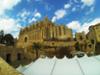
Discover the most famous places of interest in Palma during a guided city tour in just 90 minutes. Explore the beautiful historic old town and learn about history, traditions and sights. Visit the imposing Cathedral, admire the Almudaina Palace and take a look at the famous City Hall. You will spend 45 minutes in the magnificent Cathedral. Enjoy an entertaining tour and enjoy the colorful hustle and bustle of the lively squares. The Entrance fee is included for the Cathedral only.
 Art & cultureFull day
PalmaBus Tour - Departing from the North Area
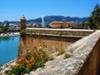
Our PalmaBus is fantastic value for money as it includes: return transport, a guide on the coach, a free map, a panoramic tour and plenty of free time to explore and enjoy Palma to the fullest. On the way to Palma, our guide will give you valuable and interesting information as well as a map of Palma City so that you can plan the day ahead in the most comfortable way, on our air-conditioned coach. Our guide will give you the best suggestions for sightseeing and shopping in Palma so that all that's left for you to do is to decide how you want to spend your day and enjoy it. Once we get to Palma, we will drop you off opposite the cathedral, which is a five-minute walk from the shopping area and Palma's historical area. From this moment you have more than four and a half hours of free time to explore the old town, visit the cathedral or go shopping. Shopping in Palma is a great experience as you have a wide selection of shops that range from luxurious boutiques to large department stores and well-known retailers. As you also have time for lunch in the city we suggest that you don't miss out on the opportunity to savour some typical Spanish and Mallorcan food. Therefore we recommend visiting La Lonja, the tapas area in Palma de Mallorca and the old fisherman’s port. Multilingual guide in English, Spanish and German.
 Art & cultureFull day
Jardines de Alfabia: House, Garden and Orchard
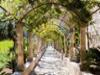
You cannot miss the opportunity to visit one of the most ancient “possesions” in Mallorca, typical Mallorca house with charming corners and maintaining its essence. A wonderful garden to walk through that will delight your senses. The Gardens Get impressed by this beautiful garden in the middle of Serra de Tramuntana. With a clear influence of English landscaping. The access consists of a wide avenue, or Roman “paseo de salon”, with three lanes of large plane trees, that reaches the “Clastra” (the typical “patio” of Majorcan country houses of a certain importance, called “possesions”). At the end of an avenue of palm trees is the facade that gives access to the most emblematic feature of the garden: the pergola with its water fountains, reconstructed at the beginning of the eighteenth century. Half of its length is adorned with twenty-four stone hydras. The numerous water jets cross one another, turning the shimmer and murmur of the water into a real gift for the senses Moving along, we reach a part of the garden remodelled in the mid-nineteenth century, with a clear influence of English landscaping, leafy and shady. This part holds the Jardinet de la Reina (The Queen’s little garden) so-called because it was conceived because of Queen Elizabeth II’s stay in Alfabia. The lower garden has a tropical flavour and a small pond with water lilies. Here we can find a wide array of palm trees from which the “garballons” stand out, a protected species that typical from Mallorca. As a historic Finca and lovers of the environment and the characteristic fauna and flora of the Balearic Islands, more specifically the Sierra de Traumanta, we breed the typical black pig for the traditional “matanza” that is carried out during the winter months to obtain the famous “sobrasadas”. You can also find Mallorcan and Ibizan goats, as well as peacocks, ducks and other poultry. The Balearic Islands are one of the zones with the highest number of native breeds, due to its island position and minimal contact with species from outside the island. The House The structure of the house has Roman-Andalusian roots. We find features and elements of different styles: Arabic, Gothic, Renaissance, Baroque, Roman, Rococo and even English in the decoration of the rooms. The main facade, created by Joan d’Aragó, an important Baroque architect of the mid-eighteenth century, is flanked by two “colcadors” or stone mounting-blocks. Its large portal (portal forà), whose doors are sheathed in bronze, has on each side two elliptical windows called “Ojo de buey” (ox-eye) and is set off by two columns and a lovely baroque frame of reddish local stone. Time has left traces of each era in the house, while the whole complex maintains its balance. In this sense, the development of the house of Alfabia is a model of respect for the past and evolution, of conservation and innovation. Inside, we can highlight the ground floor, where the rooms are more extensively furnished, which include the “Sala Gran” with painted scenes of the port of Palma and other towns; the “Sala de l’Alcova”, whose walls are covered with yellow damask, above painting of rural scenes; the “Sala de la Cadira” with numerous illustrations, musical instruments, neoclassical busts; and the dining room, the result of the reforms of the nineteenth century with painted scenes on wood and painted cloth walls hangings. INFO